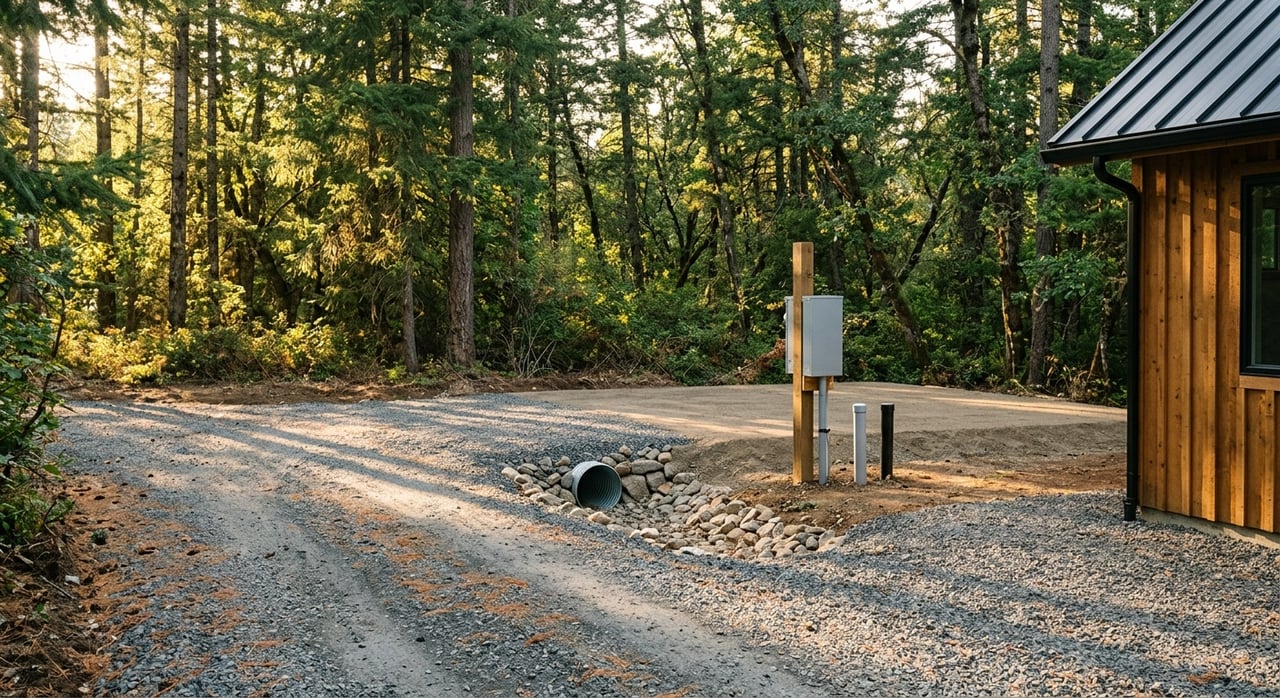
If you are eyeing timberland or a future cabin site around Eagletown, it is easy to fall for the trees, the views, and the quiet first. But in this part of McCurtain County, a beautiful tract is only part of the story. You also need to know how the land lays, how you reach it, and what it will take to make it usable. This guide will help you evaluate Eagletown-area land with more confidence so you can spot both opportunity and red flags before you buy. Let’s dive in.
Why Eagletown Parcels Need Close Review
Eagletown sits in McCurtain County, where the terrain can change quickly from one parcel to the next. County geography shifts from rugged Ouachita foothills in the north to coastal plain in the south, which means nearby tracts may have very different slope, drainage, road access, and buildability.
That matters if you are comparing timberland, a private getaway site, or acreage for a future cabin. Two properties with similar price tags can have very different development costs once you factor in driveway work, utility setup, and site prep.
The area also draws buyers because of its outdoor lifestyle appeal. The region connects to recreation centered around the Ouachita National Forest, Broken Bow Lake, Beavers Bend State Park, and Three Rivers Wildlife Management Area, all of which support activities like camping, fishing, hunting, hiking, water recreation, and trail use.
Start With Land Shape and Terrain
Before you think about building plans, look closely at the physical character of the tract. Slope, drainage, and usable flat ground will shape almost every decision you make later.
A parcel with heavy tree cover may look ideal at first glance, but you still need to ask where a driveway can go, where a cabin pad could sit, and how stormwater moves across the land. In a county with changing topography, these details are not minor. They can affect cost, timeline, and whether the site works the way you expect.
When you walk land around Eagletown, pay attention to:
- Steep versus gentle areas
- Low spots that may hold water
- Existing trails or rough roadbeds
- Natural clearings that may support a homesite
- Creek crossings or drainage channels
- The amount of usable frontage along a road or easement
For timberland buyers, terrain also affects management. If equipment access is limited, future thinning, cleanup, or timber work may be harder and more expensive.
Legal Access Comes First
One of the most important questions for any rural tract is simple: How do you legally get to it? You should confirm whether the property fronts a public road, relies on a private road, or is reached by an access easement.
Just as important, you need to know whether that easement is recorded and practical for the intended use. A paper easement is not always the same as a buildable, dependable access route for a cabin, timber operation, or future rental use.
In this market, access status matters enough that nearby Hochatown zoning specifically measures setbacks from access easements and rights-of-way, and public maps distinguish county-owned public roads from privately owned collector roads. Even if your target parcel is not in Hochatown, that local framework shows how seriously access should be taken in this region.
Do Not Assume Road Maintenance
Road access and road maintenance are not the same thing. In McCurtain County, the county's tax explanation states that no property tax money goes to county roads, so buyers should ask directly who handles grading, culverts, and storm damage repairs.
That question becomes even more important for remote acreage. If a road washes out or develops drainage issues, you will want to know in advance who is responsible and how repairs are typically handled.
You should also think about emergency access. McCurtain County lists an Eagletown Volunteer Fire Department, which is a good reminder to evaluate driveway width, entry points, and turnaround space for larger vehicles.
Check the Parcel’s Jurisdiction
Not every tract around Eagletown falls under the same rules. Some parcels may be in county territory, while others may be subject to municipal requirements depending on exact location.
That is especially important if your long-term plan includes a short-term rental cabin. In Hochatown, the zoning ordinance states that short-term rentals are defined by town code and require a license before operation, along with other parcel and use standards.
The takeaway is clear: there is no one-rule-fits-all answer for land in this area. You need a parcel-by-parcel jurisdiction check before assuming what can be built or how the property can be used.
Water Can Be a Major Decision Point
For rural cabin sites, water service is one of the first practical hurdles. If the parcel is not connected to a public system, you may be looking at a private well.
Oklahoma DEQ says privately owned wells are not regulated by state or federal government, and the owner is responsible for water quality. DEQ also recommends routine testing, which makes well information a key part of due diligence.
If a tract already has a well, ask for details such as:
- Well age
- Pump history
- Flow rate
- Recent water testing results
- Any records of repairs or replacement
If there is no well yet, you should factor future well planning into your budget and timeline. Water is not something to leave as an afterthought on raw land.
Septic Suitability Can Make or Break a Site
Wastewater is just as important as water supply. Oklahoma DEQ states that many homes and businesses in the state use on-site sewage systems, and new installations or modifications require a Report for On-Site Sewage, a soil profile test, an Authorization to Construct, and inspection before operation.
DEQ also notes that system design depends on lot size, lot shape, the residence, and soil test results. Some parcels may need alternative systems approved by DEQ.
That means a wooded tract that looks perfect on the surface may still face added septic complexity. Before you buy, it is smart to ask whether the property already has a permitted system, whether prior testing was completed, and whether the soils support your intended use.
Timber Value Is More Than Tree Count
If you want a tract that offers both privacy and long-term flexibility, think beyond how dense the woods look from the road. Healthy timberland is not just about having trees. It is about species mix, age class, access for management, and a plan for the future.
OSU Extension says forest stand improvement can help improve forest composition and structure for timber, wildlife, aesthetics, watershed protection, and wildfire prevention. It lists tools such as prescribed fire, thinning, herbicide, mechanical reduction, and invasive-species control.
OSU Extension also says a forest inventory is a strong first step for owners who want to manage woodland or sell timber. For buyers, that makes a big difference. A tract with a clear inventory and management path may offer more long-term value than one that simply looks heavily wooded.
Rental Plans Require Extra Review
If you are buying land with hopes of building an income-producing cabin, add another layer of due diligence early. Rules and tax obligations can vary based on the exact location and the structure of the rental operation.
Oklahoma Commerce says sales tax collections are required for special service businesses such as hotels, motels, recreational cabins, and bed-and-breakfast operations. That means an income-producing cabin should be checked for sales-tax registration and remittance responsibilities.
State lodging rules may also be narrower than many buyers expect. Oklahoma State Department of Health rules apply to guest rooms and supporting facilities, define a lodging establishment as a place with five or more transient guest rooms, and state that the chapter is not intended to regulate permanent living quarters or establishments that require rental of the entire establishment and grounds.
Local tax treatment can also vary by exact location. The Oklahoma Tax Commission chart lists McCurtain County lodging tax at 3% and Broken Bow lodging tax at 5%, which is another reason exact siting matters when you are evaluating a rental concept.
A Practical Eagletown Land Checklist
When you compare timberland and cabin sites around Eagletown, keep your process simple and disciplined. A solid first-pass review can save you time and help you avoid expensive surprises.
Use this checklist as a starting point:
- Is the parcel in county territory or inside a municipality?
- Does it have legal access by public road, private road, or recorded easement?
- Who maintains the road, culverts, and storm repairs?
- Is water available from a public system or a private well?
- If there is a well, what is the testing and pump history?
- Has septic approval been completed, or will new DEQ review be needed?
- Does the terrain support a driveway, build site, and drainage plan?
- If the land is timbered, is there an inventory or management history?
- If rental use is planned, what licenses, taxes, and local rules apply?
Why Local Guidance Matters
Land in the Eagletown area can be rewarding, but it is rarely plug-and-play. The mix of rural access, varied terrain, utility questions, and use-specific rules means good land decisions usually come from careful local review, not quick assumptions.
That is where experienced support helps. A buyer looking at acreage for recreation, a future cabin, or long-term investment often benefits from asking the right questions early and bringing in the right professionals at the right time.
For technical due diligence, the research points buyers toward professionals such as a surveyor, a DEQ-certified soil profiler or septic professional, a consulting forester, and a local attorney or accountant. And when you want help narrowing down the right tract in McCurtain County, working with a local real estate guide can make the process far more efficient.
If you are comparing timberland or cabin sites around Eagletown and want practical, local insight on what to look for, reach out to Teresa Bartlett. She can help you evaluate land opportunities across McCurtain County with the kind of on-the-ground perspective that matters in a market like this.
FAQs
What should you check first on timberland near Eagletown?
- Start with legal access, terrain, drainage, and jurisdiction so you understand whether the parcel is actually usable for your goals.
How important is road access for a cabin site around Eagletown?
- Road access is critical because you need to confirm not only how you reach the property, but also whether the route is legally documented and who maintains it.
What water questions matter for rural land in McCurtain County?
- If the parcel uses a private well, ask about well age, pump history, flow rate, and recent water testing because the owner is responsible for water quality.
What septic approvals may be needed for an Eagletown cabin site?
- New or modified on-site sewage systems in Oklahoma require DEQ-related steps that can include a soil profile test, a Report for On-Site Sewage, an Authorization to Construct, and inspection before operation.
Can you use any Eagletown-area parcel for a short-term rental cabin?
- Not automatically, because rental use depends on the parcel’s jurisdiction and may involve local licensing, plus state and local tax obligations.
Why does timber management matter when buying wooded land near Eagletown?
- Timber management affects long-term value, access, wildfire prevention, forest health, and how flexible the property may be for future use.
