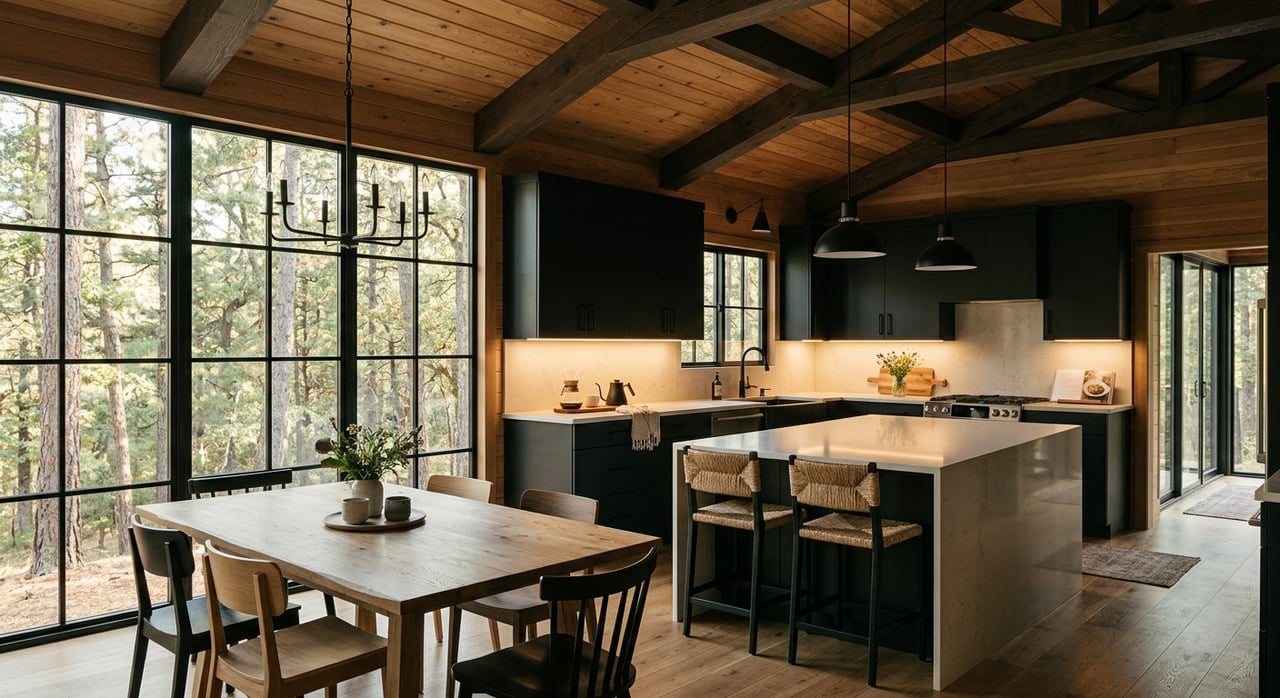
Thinking about buying a short-term rental in Hochatown? You are looking at one of Oklahoma’s most tourism-driven cabin markets, but that does not mean every property is a good investment. If you want to buy with confidence, you need to understand demand, seasonality, competition, amenities, and local rules before you make an offer. This guide breaks down the basics so you can evaluate opportunities in Hochatown more clearly. Let’s dive in.
Why Hochatown attracts STR demand
Hochatown is not a typical rental market built around commuters or business travelers. It is a destination market shaped by leisure travel, cabin stays, and outdoor recreation. According to official Oklahoma Department of Transportation project materials, the area sees heavy tourism activity, with more than 30,000 people in town on weekends and holidays and millions of visitors connected to the broader destination each year.
A major reason for that demand is the area’s access to Beavers Bend State Park and Broken Bow Lake. TravelOK notes that Beavers Bend State Park spans 3,482 acres and includes cabins, campsites, hiking, fishing, boating, and year-round trout stocking. The same source says Broken Bow Lake offers about 180 miles of shoreline, which helps support year-round interest from travelers looking for nature, recreation, and larger group getaways.
For you as an investor, that means guest demand is tied closely to the vacation experience. Location, easy access, parking, and outdoor appeal often matter just as much as square footage. In a market like Hochatown, you are selling the stay as much as the structure.
What the market numbers suggest
If you have looked at short-term rental data for Hochatown, you have probably noticed that different platforms show different numbers. That is normal. What matters most is that the major data sources point to the same broad pattern: a large and competitive cabin market with moderate occupancy and strong average nightly rates.
AirDNA market data for Broken Bow reports 4,372 listings, 43% occupancy, a $445 average daily rate, and about $50.5K in annual revenue. The research also notes that most listings are widely available throughout the year, and many appear on both Airbnb and Vrbo, which suggests a mature market with a strong professional-management presence.
That level of competition matters. A crowded market can still create opportunity, but it usually rewards properties that stand out in photos, offer the right amenity mix, and are priced carefully for the season. If you are underwriting a purchase, it is smarter to view local revenue and occupancy figures as a range rather than a guarantee.
Expect real seasonality
One of the most important things to understand about investing in Hochatown is that bookings are not flat throughout the year. This is a market with clear peaks and valleys. StaySTRA data for Broken Bow shows occupancy ranging from 39% in February to 62% in July, with stronger performance in summer and during key holiday periods.
That means your cash flow planning needs to be conservative. Strong summer and holiday revenue can help support annual performance, but slower late-winter months still need to be built into your projections. If you only underwrite peak-season results, you may overestimate what the property can realistically deliver.
Seasonality also affects pricing strategy. During high-demand periods, the right cabin may command a much higher nightly rate. In slower months, better photography, thoughtful marketing, and minimum-stay adjustments can become more important.
Cabin sizes that fit the market
Hochatown is overwhelmingly an entire-home lodging market. AirDNA reports that 100% of local listings are entire homes, with inventory spread across one-bedroom cabins through large 5+ bedroom properties. The mix is broad, but 2- to 4-bedroom cabins make up a large share of the market.
That makes sense for the local guest profile. Many visitors are booking family getaways, friend trips, or multi-couple weekend stays. Mid-size cabins can appeal to a broad audience, while larger luxury cabins may target group travel and premium price points.
There is no one-size-fits-all answer to which cabin performs best. A smaller cabin may be easier to acquire and operate, while a larger one may create higher top-line revenue if the layout, location, and amenities line up. Your decision should depend on your budget, risk tolerance, and whether you want broad appeal or a more specialized luxury product.
Amenities that help cabins compete
In Hochatown, basic features are expected. Air conditioning, internet, kitchen access, and heating appear in nearly all listings according to AirDNA. That means simply checking the basics is not enough to make a property stand out.
What tends to matter more is the overall guest experience. Local cabin examples featured on BrokenBow.com highlight recurring amenities like hot tubs, fire pits, outdoor games, game rooms, decks, and strong indoor-outdoor gathering spaces. These features fit the way travelers use cabins in this market.
If you are comparing two properties, ask yourself which one is more likely to create memorable photos and a better stay. A polished covered deck, inviting fire feature, or game room may influence demand more than an extra small bonus room. In a vacation market, emotional appeal often supports pricing power.
Pricing by cabin size
Rates vary widely based on size, finish level, location, and season. Local cabin pages on BrokenBow.com suggest rough nightly ranges of about $150 to $350 for one-bedroom cabins, $175 to $400 for two-bedroom cabins, $225 to $500 for three-bedroom cabins, and $300 to $650 for four-bedroom cabins. The same site also shows higher-end inventory priced well above those ranges.
The takeaway is simple: cabin size matters, but it is not the only pricing driver. Two cabins with the same bedroom count can perform very differently if one has a stronger layout, better outdoor space, or more polished design. In Hochatown, guests are often comparing an experience package, not just a bedroom count.
That is why property selection matters so much. A well-designed cabin with attractive gathering areas and strong visual appeal may compete better than a larger cabin with a weaker layout or less compelling outdoor setup.
Regulations to review before buying
Hochatown is actively regulating short-term rentals, and that should be part of your early due diligence. The town’s short-term rental page states that operators must register, maintain current lodging tax status, post the license near the main entry, and provide a 24/7 emergency contact. The page also notes an initial $300 registration fee, a $100 annual renewal due by July 1, and a $250 monthly late fee for missed registration or renewal deadlines.
The town’s zoning ordinance is just as important. According to the Hochatown zoning ordinance, short-term rentals are allowed in AG, RS, CM, MU, and CT districts, but not in ID. The ordinance also addresses setbacks, access, parking lots, and related site standards, which can have a real impact on larger cabins and multi-lot projects.
For you, this means a property should be evaluated as both a real estate purchase and an operating business. Before you buy, confirm that the parcel is in an eligible district and that the site layout supports the way guests will actually use the property.
Taxes and conservative underwriting
Taxes are another area where careful planning matters. The Oklahoma Tax Commission says the state sales tax rate is 4.5%, and sales tax collection applies to recreational cabins and bed-and-breakfast operations. Hochatown public documents also list a 4% lodging tax ordinance, which means taxes should be built into your numbers from the start.
Because tax treatment can depend on the exact parcel and jurisdiction, it is smart to verify the address-level setup before closing. Even a strong-performing cabin can disappoint if your underwriting leaves out required fees, taxes, or operating costs.
A more conservative approach usually works better in a market like this. You want a purchase that still makes sense during slower months, not just one that looks good on a holiday-weekend spreadsheet.
A practical checklist for investors
If you are evaluating a cabin in Hochatown, focus on these questions early:
- Is the property inside Hochatown city limits, and is it in an STR-eligible zoning district?
- Does the site have adequate parking, driveway access, and turn-around space for guests?
- How does the cabin compare with competing listings in size, layout, and amenity appeal?
- Does your budget account for registration fees, annual renewals, lodging tax, and sales tax?
- Can the property carry slower winter months without relying on best-case occupancy?
- Does the cabin offer the kind of experience guests expect in this market, such as outdoor gathering space, a hot tub, or a game room?
This kind of checklist can help you move past surface-level excitement and look at the property like an investor. In a tourism-driven market, the best opportunities are usually the ones that balance guest appeal with realistic operating assumptions.
Why local guidance matters
Hochatown can be a compelling place to invest, but it is not a plug-and-play market. Demand is real, yet so are the regulations, seasonality, and competition. Buying the right short-term rental often comes down to understanding zoning, access, cabin design, amenity trends, and how a specific property fits the local guest experience.
That is where local insight can make a real difference. If you are exploring cabin opportunities, land, or a turn-key investment in the Broken Bow and Hochatown area, Teresa Bartlett can help you evaluate the details that matter and move forward with a clearer strategy.
FAQs
What makes Hochatown different from other short-term rental markets?
- Hochatown is a destination cabin market driven by leisure travel, outdoor recreation, and weekend or holiday demand rather than commuter or business travel.
What occupancy and rate trends should investors expect in Hochatown?
- Market data sources show moderate occupancy, strong average daily rates, and clear seasonality, with stronger performance in summer and holiday periods and slower results in late winter.
What cabin size works best for a Hochatown short-term rental?
- The market has strong representation in 2- to 4-bedroom cabins, though there is also a meaningful luxury segment for larger 5+ bedroom properties.
What amenities help a Hochatown cabin compete for bookings?
- Recurring high-interest features include hot tubs, fire pits, game rooms, outdoor decks or patios, fireplaces, Wi-Fi, and inviting gathering spaces.
What regulations should buyers check before buying a short-term rental in Hochatown?
- You should confirm STR licensing requirements, zoning eligibility, site access, parking, and local tax obligations before underwriting or closing on a property.
What taxes should investors include when underwriting a Hochatown STR?
- Investors should account for Oklahoma sales tax, Hochatown lodging tax, and local registration and renewal costs, then verify the exact setup for the property address before purchase.
